
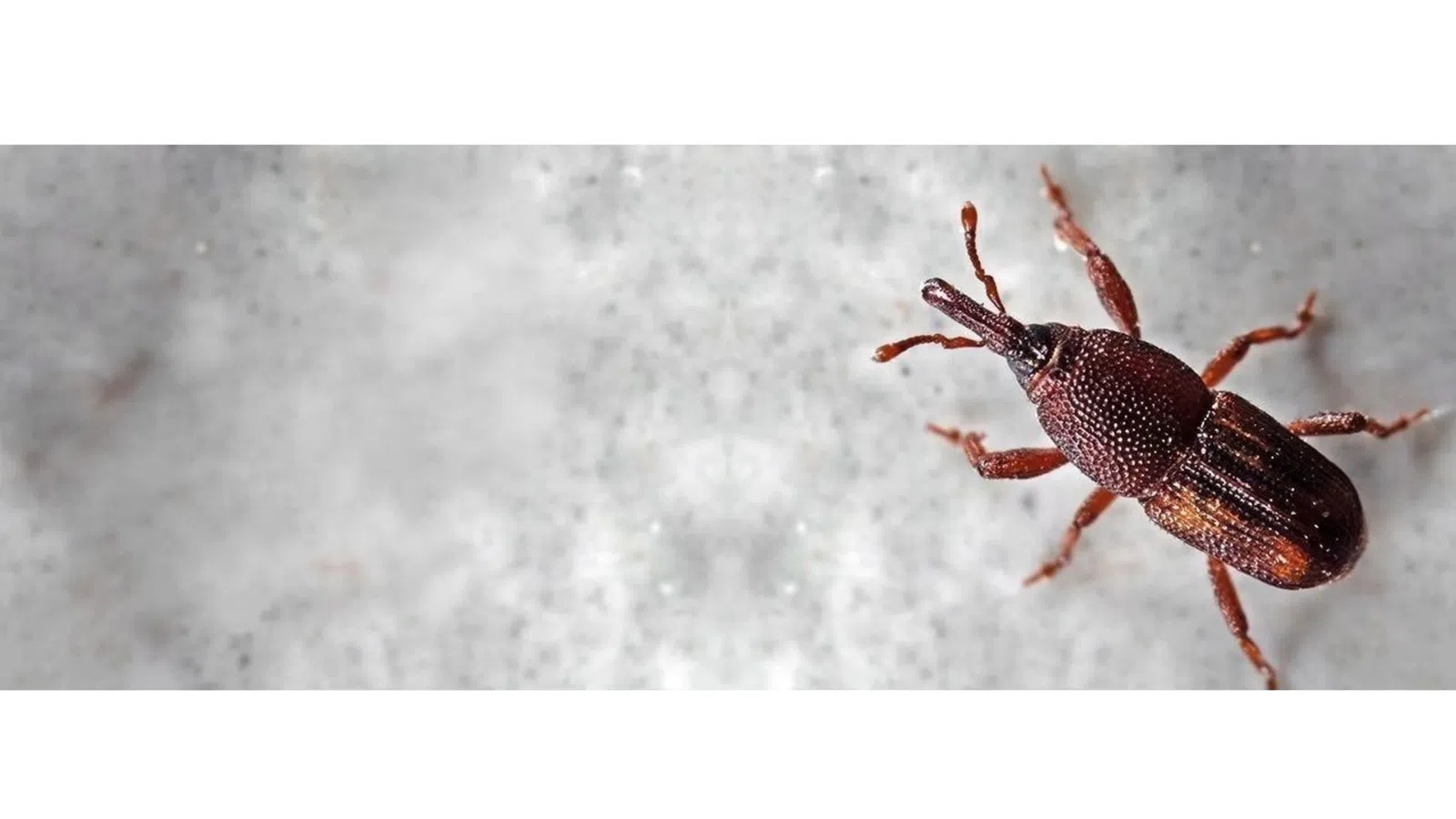
Rice Weevils
Latin Name: Sitophilus oryzae
What are rice weevils?
Rice weevils are stored product pests that infest whole grains and other pantry items. They were named after being found feeding on whole grain rice, but they can also infest corn, wheat, beans, nuts, cereals, sunflower seeds, and other grain-based products.
Adult rice weevils are very small, measuring about 1/10 of an inch long. They have reddish-brown to black, oval-shaped bodies and a long snout, which is one of their most noticeable features. Rice weevils also have small round pits on the thorax and four yellow or reddish spots on their forewings. Unlike some other pantry pests, adult rice weevils are strong flyers.
The larvae are cream-colored, legless, grub-like insects with dark head capsules. The larval stage is responsible for most of the feeding damage.
Where will I find rice weevils?
Rice weevils may be found anywhere whole grains are grown, processed, stored, or used. They can live in crop fields, food processing facilities, food storage buildings, restaurants, grocery stores, and homes.
Inside homes, rice weevils are usually found in kitchens, pantries, cabinets, and storage areas where rice, grains, cereals, beans, seeds, nuts, or other dry goods are kept.
Why do I have a rice weevil problem?
Rice weevil infestations often begin before the product ever reaches your home. Grains may become infested in the field, during processing, or while in storage. When infested products are purchased and brought indoors, rice weevils can spread to other pantry items.
Adult rice weevils may also enter homes from outside. They are attracted to lights and can get inside through torn screens, gaps around windows and doors, or other small openings.
Are rice weevils dangerous?
Rice weevils are not known to bite or sting people, but they are damaging pests. They contaminate and destroy stored grains, making infested food unsuitable to use.
In homes, they can quickly spread through pantry items. In agricultural and commercial settings, rice weevils can cause major product loss by damaging large amounts of stored grain.
How do rice weevils damage food?
Female rice weevils chew small holes into whole grains and lay their eggs inside. They then seal the opening with a substance they produce. Once the eggs hatch, the larvae feed inside the grain until they develop into adults.
After reaching adulthood, rice weevils chew their way out of the grain, leaving behind small exit holes. Because the larvae develop inside the product, infestations can be difficult to notice until adults begin emerging.
How can I help prevent rice weevils?
To help prevent rice weevils, inspect food packaging for holes, rips, or damage before buying it. Once dry goods are brought home, remove grains from their original packaging and store them in airtight glass or plastic containers.
Rotate pantry items regularly and throw away old or expired products. Avoid mixing partial containers of grains together, since this can spread an infestation from one product to another.
To help keep adult rice weevils from entering, repair torn screens, add weatherstripping around windows and doors, and replace white outdoor bulbs with yellow or LED bulbs that are less attractive to insects.
If rice weevils are found, inspect all stored grains and dry goods, discard infested items in sealed bags, and clean pantry shelves thoroughly before restocking.
Similar pests: Cigarette beetles, Confused flour beetles, Grain weevils, Indian meal moths, Moths, Pantry pests