
Termite Control
Protect your biggest investment, your home
Termite Damage is No Joke
$6.8 Billion
of Damage Each Year
600,000+
Homes & Businesses Invaded
$3,000
Average Repair Cost

Is Your Home Covered?
Why You Need a Termite Warranty
Eastern subterranean termites cause over $6.8 billion in damage annually. Most homeowners' insurance policies do not cover termite damage.
The PestNow Safety Net:
Detection: We find what you can't see—mud tubes, hollow wood, and galleries.
Elimination: Using industry-leading technology to wipe out the colony at the source.
Warranty: Active protection that means if they return, we do too—for free.
Don't leave your biggest investment to chance. Get a professional termite inspection today.


Termite Letters
Our Wood Destroying Insect Report for Real Estate Transactions Includes:
- A thorough inspection of the property's interior, exterior, crawl space, attic (if accessible), and other structural areas.
- A detailed report outlining active infestations, previous termite damage, and areas conducive to termite infestations
- Detailed diagrams of the home or business
- Clear documentation for lenders and real estate professionals.
WDI Reports & Termite Letters
Moving You Toward Closing
Whether you're a buyer, seller, or real estate professional, a Wood Destroying Insect (WDI) Report is an essential part of the home-buying process. Often required by mortgage lenders, this report (also known as a NPMA-33 or Termite Letter) identifies:
Active or past termite infestations.
Damage from powderpost beetles or carpenter ants.
Potential structural risks from wood-destroying organisms.
All Termite Letters are $49.
PestNow provides timely inspections across the DMV area to ensure your real estate transaction stays on track.
Your Termite Questions Answered
We have the answers to commonly asked questions about termites.
How can I tell if I have termites in my home?
Common signs of a termite infestation include:
- Mud tubes along foundation walls
- Bubbling or uneven paint
- Hollow-sounding wood
- Discarded wings near windows or doors. Termite swarms indoors, especially in spring, are a major red flag.
- Visible damage to wood structures.
Contact us for a professional inspection immediately.
What time of year are termites most active?
Termites are active year-round, but swarm season typically occurs in spring, especially after a warm rain. Subterranean termites, the most common type in the area, are particularly noticeable from March to May.
While swarms are most visible during the spring, Eastern subterranean termites remain active underground throughout the winter, often nesting deep near your home's foundation for warmth.
I just bought a house that you have under warranty. Do I have to pay a fee to transfer it to my name?
No! We offer free warranty transfers. If you've purchased a home already protected by PestNow, we make the transition seamless. Simply contact us with your information, and we will update the records to ensure your new investment remains covered without interruption or additional fees.
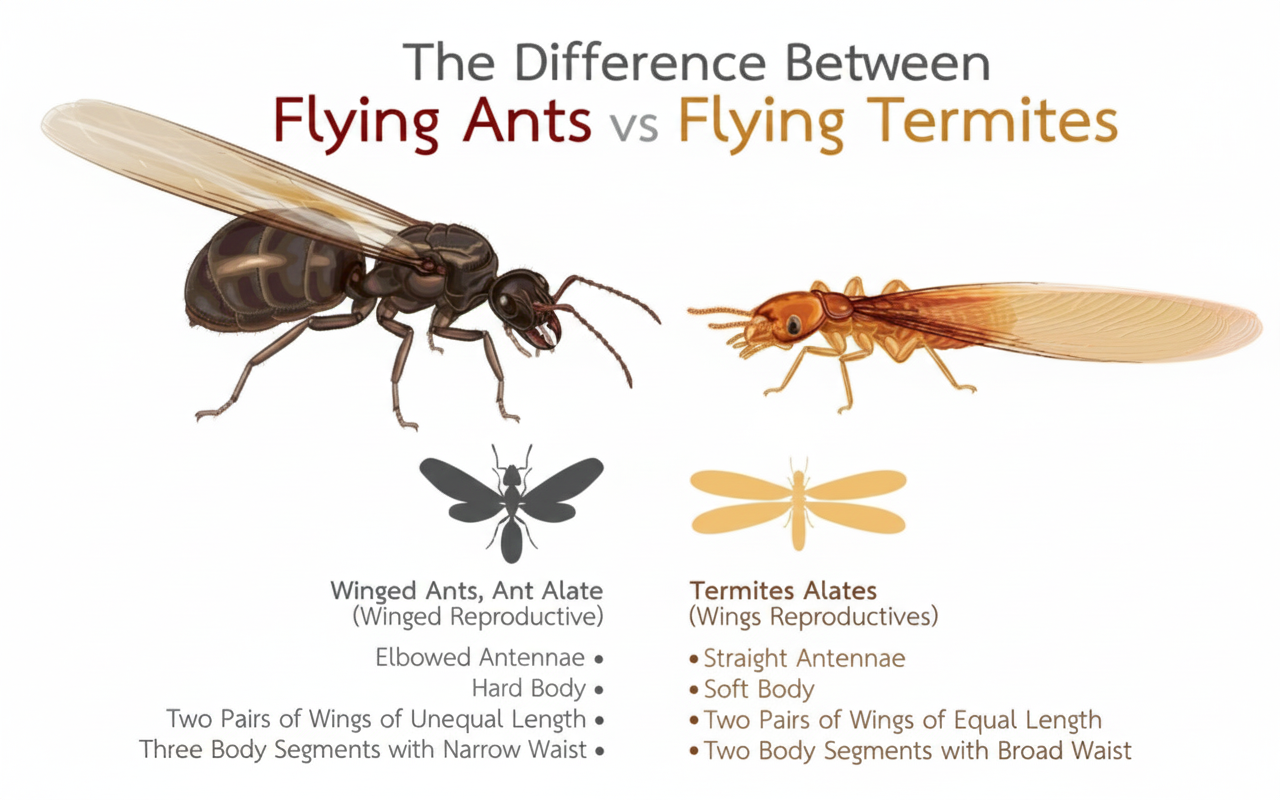
How can I tell the difference between flying ants and termites?
While they look similar to the naked eye, their anatomy tells a different story:
- Termites: Have straight antennae, a broad/thick waist, and two pairs of wings that are equal in length.
- Ants: Have elbowed (bent) antennae, a pinched waist, and hind wings that are shorter than their front wings
What is a termite letter?
A termite letter, also known as a termite inspection report or wood-destroying insect report, is a document provided by a licensed pest control company. This report includes information about any current or previous termite activity and any damage caused by termites or other wood-destroying organisms.
Are termites covered by homeowners' insurance?
No, termite damage is rarely covered by standard homeowners insurance policies in our area. Since termite infestations are considered preventable with proper maintenance and routine inspections, insurance companies typically exclude this type of damage.
What is a termite warranty?
A termite warranty is your home's 'safety net.' Since most homeowners' insurance policies exclude termite damage, our warranty fills that gap.
Annual Inspections: Professional monitoring to catch colonies before they reach your floorboards.
Guaranteed Re-treatment: If termites are found, we eliminate them at no additional cost.
How much does a WDI Report cost?
Termite Letters/WDIs cost $49 per inspection. All requests must be made online here.