
Cigarette Beetles
Latin Name: Lasioderma serricorne
What are cigarette beetles?
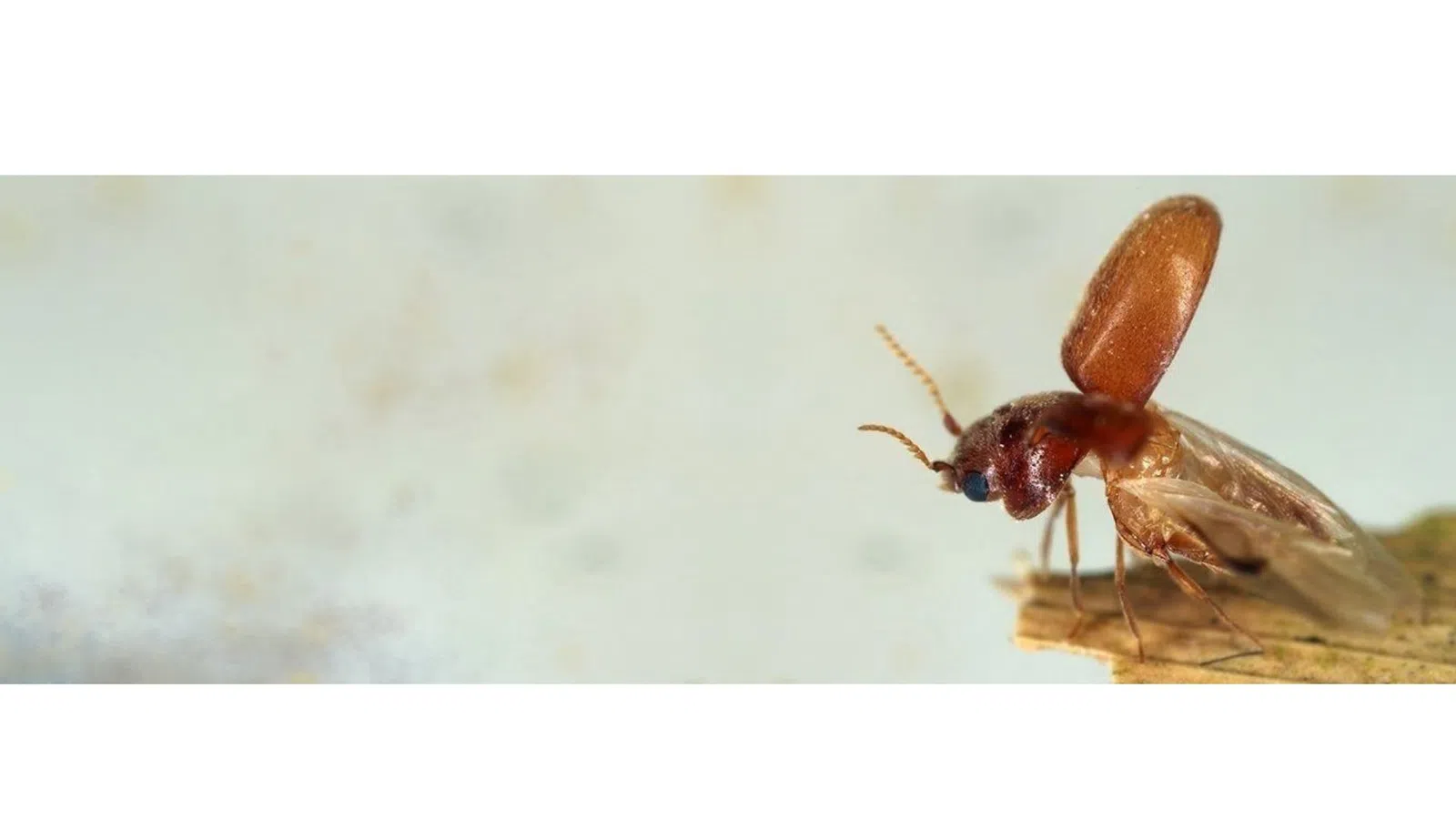
Cigarette beetles are stored product pests that feed on dried tobacco and many common pantry items. They are small, oval-shaped beetles with a humpbacked appearance because their heads bend downward. Adult cigarette beetles have serrated antennae and wings, while their larvae are creamy white, worm-like, and often found inside infested products.
Even though their name comes from their connection to tobacco, cigarette beetles can infest much more than cigarettes or cigars. They may feed on grains, dry pasta, seeds, dried fruit, rice, spices, pet food, dried flowers, and even the stuffing inside upholstered furniture.
Where will I find cigarette beetles?
Cigarette beetles prefer warm areas, usually above 65 degrees, and they tend to hide in dark, low-lit spaces. Because they stay tucked away in crevices, cabinets, pantries, storage areas, and less-traveled spaces, infestations can be difficult to spot at first.
Inside homes and businesses, they are most often found where dry goods are stored. This includes pantries, kitchens, grocery stores, drug stores, restaurants, warehouses, and food processing areas. Larvae feed directly on the products they infest, which can lead to contamination and product damage.
Why do I have a cigarette beetle problem?
Cigarette beetles often enter homes through infested products purchased from a store. Eggs or larvae may already be inside dry goods, tobacco products, dried flowers, or other stored items before they are brought indoors.
Adult cigarette beetles may also enter through small gaps around windows, doors, or damaged screens. Once inside, females lay eggs in or near suitable food sources. After the larvae hatch, they begin feeding on the items around them, allowing the infestation to grow.
Are cigarette beetles dangerous?
Cigarette beetles are not known for spreading diseases to people, but they are still a problem. Their biggest concern is the damage and contamination they cause to stored food, tobacco products, and other household items.
Infested food products should not be used. Once cigarette beetles are discovered, it is important to identify the source, remove contaminated items, and address the infestation before it spreads to other products.
How can I tell if I have cigarette beetles?
You may notice small brown beetles crawling or flying near pantry areas, cabinets, windows, or lights. You may also find holes in packaging, damaged dry goods, webbing or debris inside stored products, or larvae inside food items.
Because cigarette beetles often hide inside packaging or dark storage areas, the source of the infestation may not be obvious right away. A careful inspection of pantry goods and stored items is often needed.
How can I help prevent cigarette beetles?
To help prevent cigarette beetles, inspect dry goods before buying them and avoid packages with holes, tears, or damaged seals. Once home, store pantry items in airtight glass or plastic containers instead of keeping them in their original packaging.
Regularly check pantry shelves and dispose of old, expired, or damaged items. Clean cabinets and storage areas to remove crumbs, spilled food, and product debris. Keep screens in good condition and seal cracks or gaps around windows and doors to help prevent adult beetles from entering.
If cigarette beetles are already active, remove and discard infested products, clean the storage area thoroughly, and consider professional pest control to help locate hidden sources and prevent the infestation from continuing.
Similar pests: Moths