
Indiana Meal Moths
Latin Name: Plodia interpunctella
What are Indian meal moths?
Indian meal moths are common pantry pests that infest stored food products. They may enter homes on their own, but most infestations begin when contaminated food is purchased from a store and brought inside.
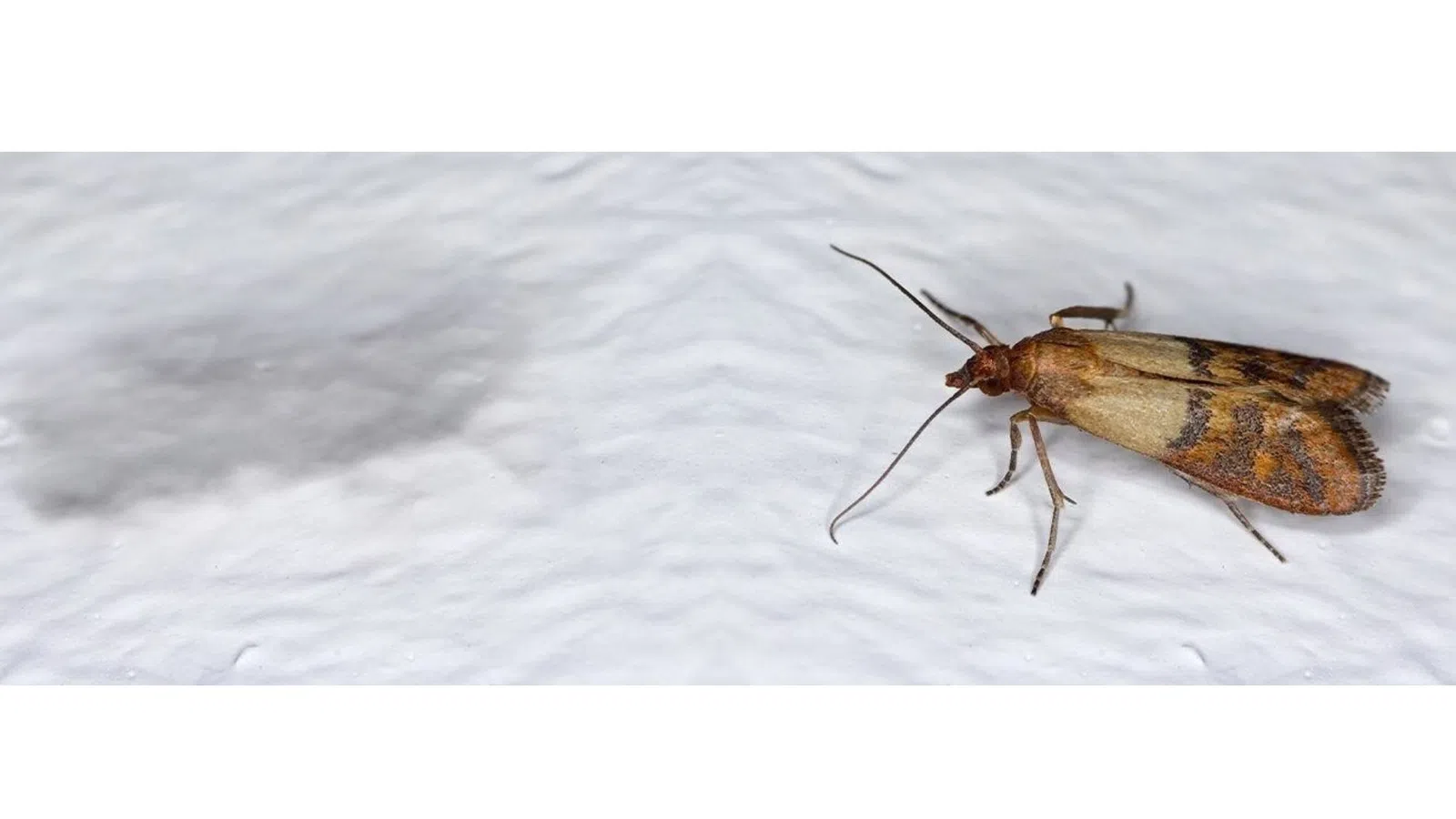
Adult Indian meal moths are easy to identify by their two-toned wings. The front half of the wings is usually cream or light brown, while the back half is darker bronze or copper-colored. Adults measure about 1/2 to 3/4 of an inch from wing tip to wing tip.
Indian meal moth larvae are about 1/2 inch long. They have brown heads and bodies that may appear pink, yellow, cream, or greenish depending on what they have been feeding on.
Where will I find Indian meal moths?
Adult Indian meal moths are often found near pantry areas, cabinets, kitchens, windows, or lights. They are active at night and may be attracted to exterior lighting before finding their way indoors through torn screens, gaps around windows and doors, or openings in exterior walls.
The eggs and larvae are usually found inside stored food products. Indian meal moths can infest cornmeal, grains, cereal, seeds, chocolate, birdseed, dry pet food, nuts, dried fruit, and other pantry items.
Why do I have an Indian meal moth problem?
Indian meal moth problems often start with contaminated food products. Infestations may begin in food processing plants, storage facilities, warehouses, or retail stores before the product reaches your home.
Once inside, adult females lay their eggs on suitable food sources. When the larvae hatch, they begin feeding on the food, allowing the infestation to spread to other pantry items if products are not sealed properly.
Are Indian meal moths dangerous?
Indian meal moths are not known to bite, sting, spread disease, or damage the structure of your home. However, they are a concern because they contaminate food.
As the larvae feed, they leave behind saliva, droppings, shed skins, and webbing. Infested food should be thrown away, as it is no longer safe or pleasant to use. Their presence can also be frustrating because they may spread through multiple pantry items if not addressed quickly.
How can I tell if I have Indian meal moths?
You may notice small moths flying around the kitchen, pantry, or near lights. You may also find larvae, webbing, clumped food, or debris inside dry goods.
Because larvae live inside food packaging, the source of the infestation may not be obvious at first. A thorough inspection of pantry products is usually needed to find where they are coming from.
How can I help prevent Indian meal moths?
To help prevent Indian meal moths, inspect food packaging for holes, tears, or damage before buying it. When possible, avoid purchasing dry goods, birdseed, or pet food from bulk bins.
At home, remove dry goods from their original packaging and store them in airtight containers. Keep pantry areas organized, clean up crumbs, wipe down counters, vacuum floors, and throw away expired items regularly.
To help keep adult moths from entering, repair torn screens, add weatherstripping around windows and doors, and replace white outdoor bulbs with yellow or LED bulbs that are less attractive to insects.
If Indian meal moths are already present, inspect all stored food products, discard infested items in sealed bags, and clean pantry shelves thoroughly before restocking.
Similar Pests: Moths, Confused flour beetle, Cigarette beetle