
Bottle Flies
Latin Name: Lucilia sericata
What are bottle flies?
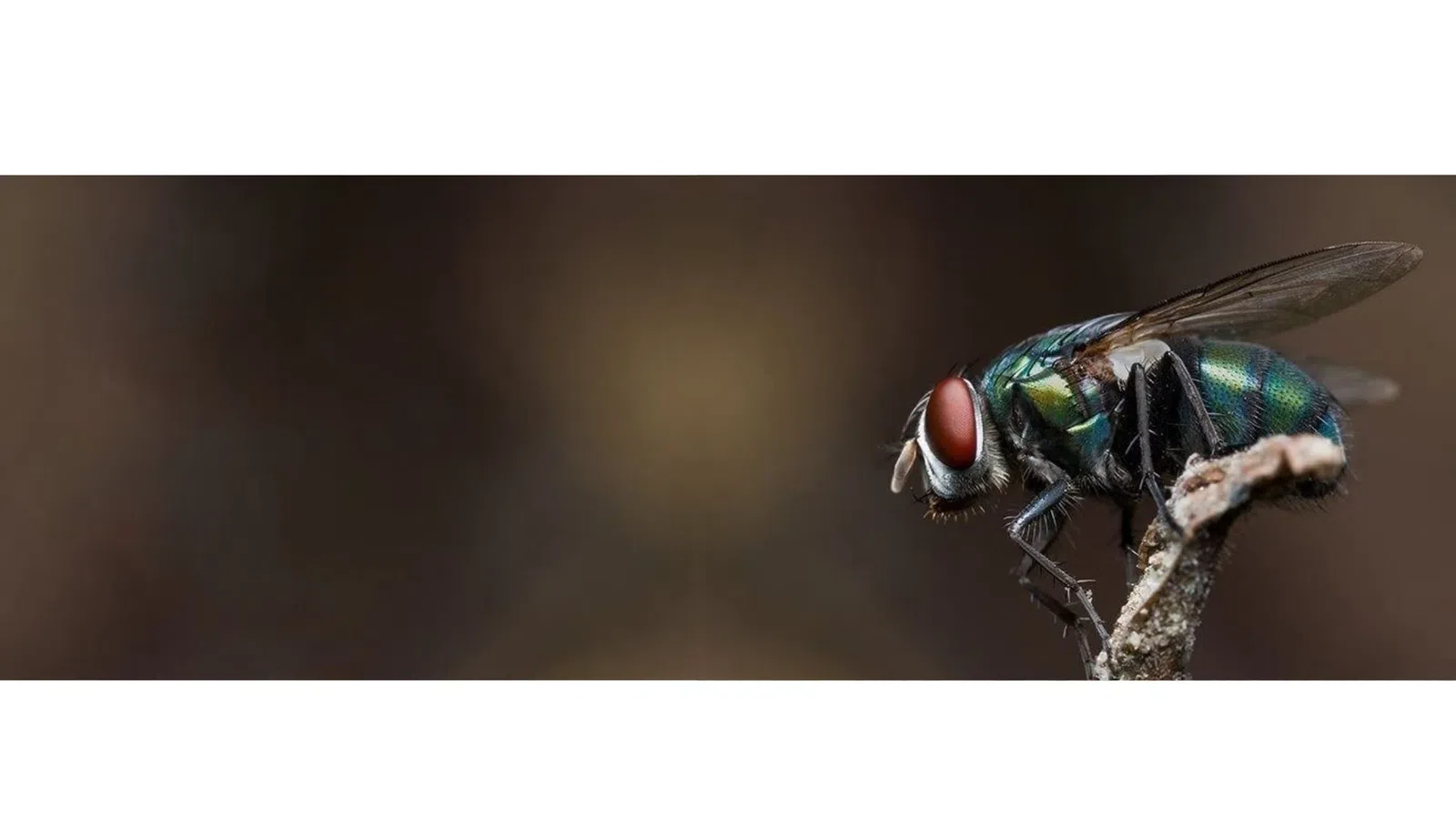
Bottle flies are medium-sized flies that look similar to common house flies but are usually slightly larger. They are easy to recognize because of their shiny, metallic appearance. Depending on the species, they may appear blue, green, gold, or shiny black. Bottle flies also have large reddish-brown eyes and clear wings.
Bottle fly larvae are pale yellow to white and worm-like in appearance. They are eyeless, legless, and have hook-like mouthparts. Their bodies taper from the head toward the back end.
Where will I find bottle flies?
Bottle flies are most often found outdoors near food sources and breeding sites. They commonly gather around garbage, decaying meat, animal waste, carcasses, and other rotting organic material.
Bottle flies can also make their way indoors through gaps around windows and doors, torn screens, vents, or openings in exterior walls. When they are found inside in larger numbers, it may be a sign of a dead rodent, bird, or other animal hidden behind walls, in an attic, crawl space, or another concealed area.
Why do I have a bottle fly problem?
Bottle flies become a problem when a property provides easy access to food and places to lay their eggs. Garbage, pet waste, dead animals, and decaying organic matter can quickly attract them.
They are especially active during the warmest months of the year and can become a concern around homes, restaurants, grocery stores, and other places where food is prepared or stored. Once they find a suitable food source, they can gather in large numbers and become difficult to manage.
Are bottle flies dangerous?
Yes, bottle flies can pose health risks. Because they lay their eggs in excrement, carrion, garbage, and decaying matter, they can pick up bacteria, parasites, and other pathogens on their bodies and legs.
When bottle flies land on food, counters, food prep areas, or other surfaces, they can spread contamination. This may increase the risk of illnesses such as diarrhea, dysentery, and food poisoning. Keeping bottle flies away from your home is important for protecting your family's health.
How can I help prevent bottle flies?
The best way to prevent bottle flies is to remove the things that attract them and keep them from getting inside. Keep doors and windows closed when possible, repair damaged screens, add weather-stripping around doors and windows, and seal openings along exterior walls.
Covers should be placed over vents that lead into the home, and trash cans should always have tight-fitting lids. Remove indoor trash daily, especially food waste, and clean up pet waste from the yard on a regular basis.
By reducing food sources, removing breeding sites, and sealing entry points, you can help keep bottle flies from becoming a problem in or around your home.
Similar Pests: Houseflies, Blow flies