
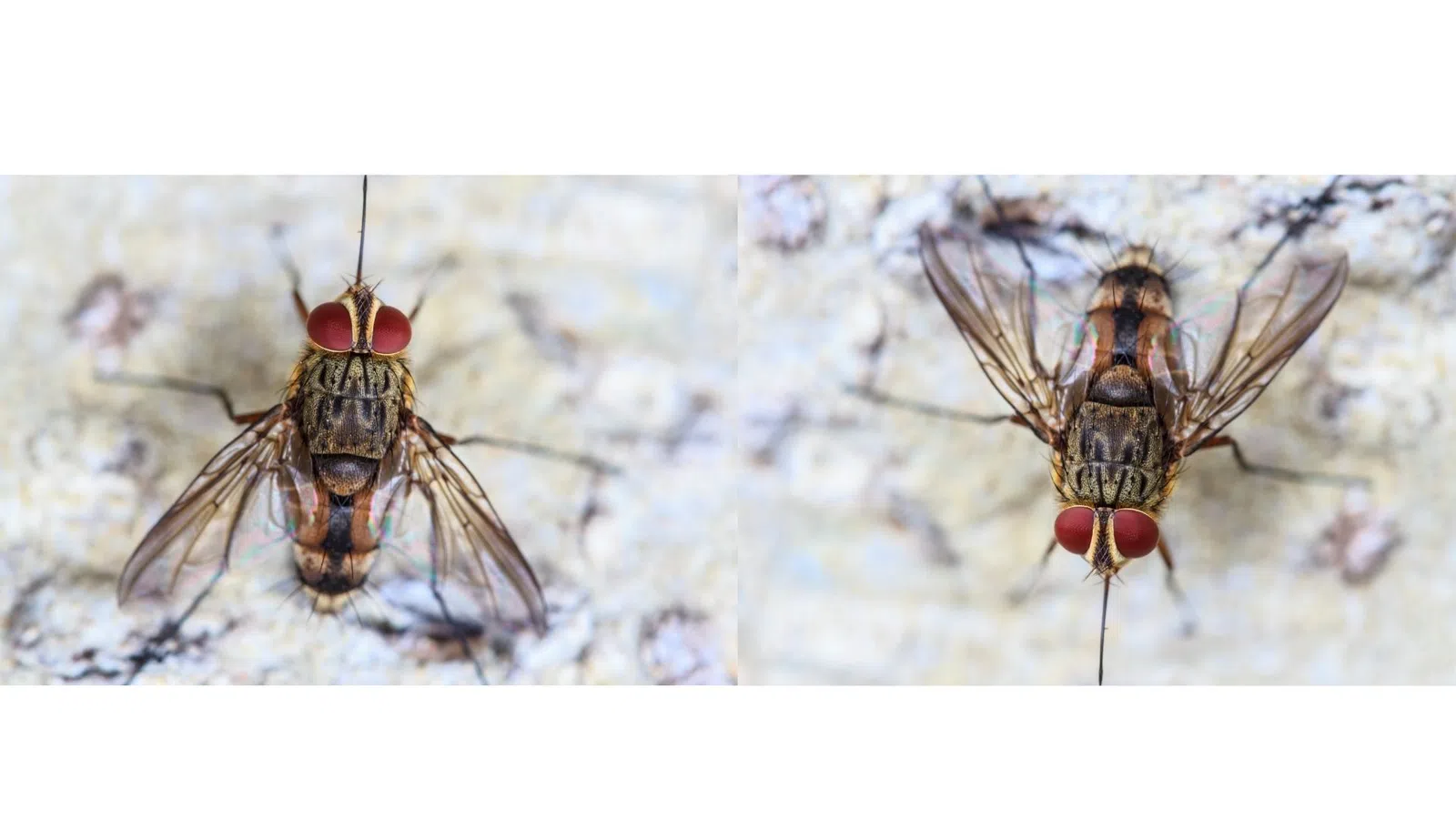
Cluster Flies or House Flies
Latin Name: Pollenia rudis
What are cluster flies?
Cluster flies are common overwintering pests that often invade homes and buildings in large numbers. They are sometimes confused with house flies, but they are a different type of fly. Cluster flies are usually larger and slower-moving than house flies, and they often gather, or "cluster," around windows, attics, wall voids, and sunny areas inside a structure.
Adult cluster flies are dull gray in color and may have golden-yellow hairs on their bodies. They are not as shiny as bottle flies or blow flies, and they tend to move more sluggishly than typical house flies.
Where will I find cluster flies?
Cluster flies spend most of their time outdoors during warmer months. As temperatures cool in the fall, they look for warm, protected places to overwinter. They often gather on the sunny sides of homes and buildings before slipping inside through cracks, gaps, vents, soffits, rooflines, and openings around windows and doors.
Once indoors, cluster flies commonly hide in attics, wall voids, ceilings, basements, closets, and other quiet areas. Homeowners may notice them near windows on warmer winter days or in early spring when they become active and try to move back outside.
Why do I have a cluster fly problem?
Cluster flies usually become a problem when they choose your home as a place to overwinter. They are attracted to warm, sunny exterior walls in the fall and may enter through very small openings.
Once inside, they stay hidden through the colder months. When temperatures rise, they may come out of hiding and gather around windows, lights, or upper rooms as they try to find a way outdoors.
Are cluster flies dangerous?
Cluster flies are mostly considered nuisance pests. Unlike some filth flies, they are not strongly associated with garbage, animal waste, or decaying food. They are not known to bite people or cause structural damage.
However, they can be frustrating because they often appear in large numbers. Dead cluster flies can also attract other pests, and their droppings may leave small stains on walls, windows, and surfaces.
How can I tell if I have cluster flies?
You may notice slow-moving flies gathering around windows, especially in upper rooms, attics, or sunny areas of the home. They may appear during fall, winter warm-ups, or early spring.
A large number of flies appearing indoors without an obvious food source may be a sign of cluster flies rather than common house flies.
How can I help prevent cluster flies?
The best way to prevent cluster flies is to keep them from entering before cooler weather arrives. Seal cracks and gaps around windows, doors, siding, rooflines, vents, utility openings, and the foundation. Repair damaged screens and make sure exterior doors close tightly.
It can also help to install door sweeps, replace worn weatherstripping, and cover vents with proper screening. Since cluster flies gather on sunny exterior walls in the fall, preventative exterior treatments before they move indoors can help reduce activity.
Once cluster flies are already inside wall voids or attics, they can be difficult to eliminate completely without professional help. A pest control professional can identify entry points, treat key areas, and help prevent future overwintering problems.
Similar Pests: Blow flies, Bottle flies