
Blow Flies
Latin Name: Calliphora vomitoria
What are blow flies?
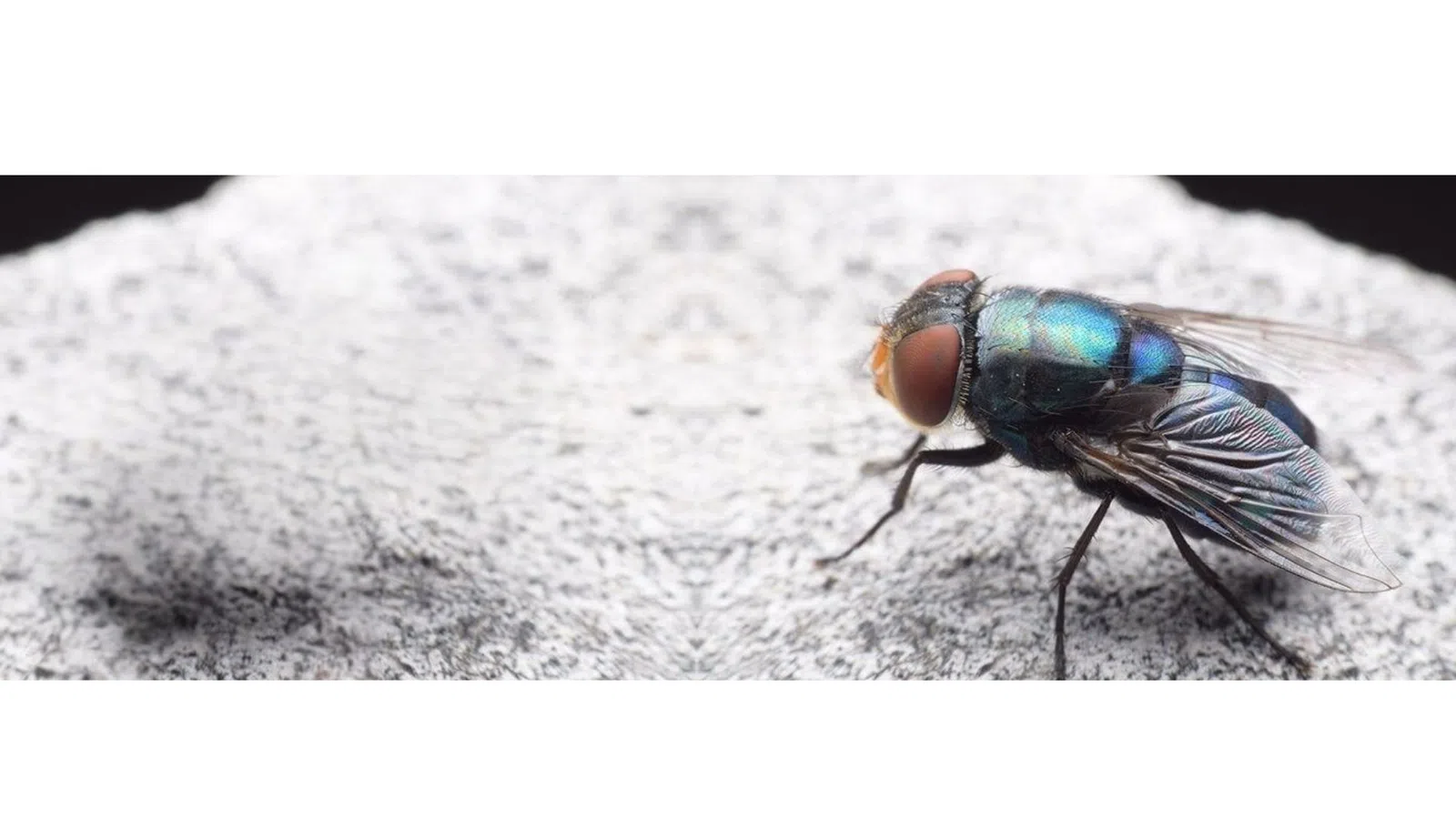
Blow flies are a type of filth fly commonly associated with decaying organic matter. They look similar to house flies but are usually larger, ranging from about 1/8 to 5/8 of an inch long. Many blow flies have a shiny, metallic appearance and may be blue, green, gold, black, or a combination of these colors.
Female blow flies lay their eggs on dead animals, animal waste, rotting meat, garbage, and other decaying materials. Once the eggs hatch, the pale yellow to white larvae feed on the decaying matter. Blow fly larvae are legless, eyeless, and worm-like, with a tapered head and hook-like mouthparts.
Where will I find blow flies?
Blow flies are most often found outdoors near their feeding and breeding sites. They commonly gather around trash cans, compost piles, gardens with rotting fruits or vegetables, animal feces, decaying meat, and dead animals.
Inside homes, blow flies may be a sign of a hidden issue. They can breed behind walls, under floors, in crawl spaces, or in other hidden areas if a rodent, bird, or other animal has died inside the structure. Seeing several blow flies indoors may indicate there is decaying organic material nearby.
Why do I have a blow fly problem?
Blow flies become a problem when your yard or home provides them with a place to feed or lay their eggs. Outdoor attractants like uncovered trash, compost, pet waste, fallen produce, and dead animals can quickly draw them to a property.
They may also enter homes while searching for food through gaps around windows and doors, damaged screens, cracks in exterior walls, or openings around the foundation. Blow flies can be active at different times of the year, especially when food and breeding sources are available.
Are blow flies dangerous?
Yes, blow flies can be a health concern. Because they land on decaying organic matter, animal waste, garbage, rotting meat, and dead animals, they can pick up bacteria, parasites, and other pathogens on their bodies and legs.
When blow flies land on food, counters, tables, and other surfaces, they can spread contamination. This can increase the risk of illnesses linked to bacteria and disease-causing organisms. For this reason, blow flies should not be ignored when they are found in or around the home.
How can I help prevent blow flies?
The best way to prevent blow flies is to remove the things that attract them. Keep doors and windows closed when possible, repair torn screens, and seal gaps around exterior openings.
Trash cans and compost bins should have tight-fitting lids, and trash containers should be cleaned and sanitized regularly. Inside the home, keep garbage covered, store food in the refrigerator or in airtight containers, and avoid leaving food out on counters or tables.
Outside, clean up pet waste daily and remove fallen fruits, vegetables, or other decaying plant material from garden areas. Keeping your property clean and reducing access points can help limit blow fly activity and prevent future infestations.
Similar Pests: Houseflies, Bottle flies