
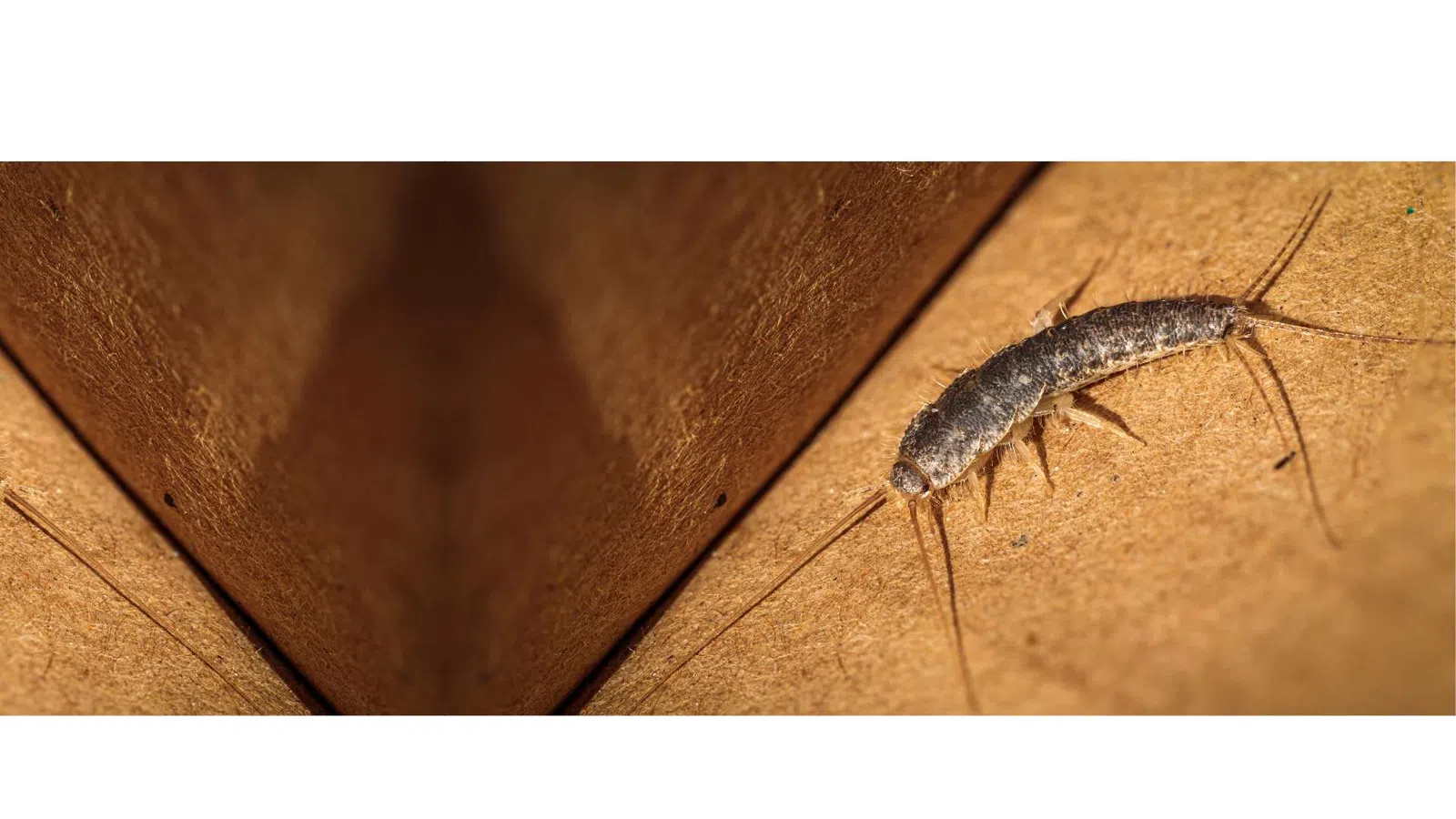
Silverfish
Latin Name: Lepisma saccharina
What are silverfish?
Silverfish are small, wingless insects and one of the oldest groups of insects in the world. They belong to the order Zygentoma and are known for their quick, fish-like movements and silvery appearance.
These pests are usually white, brown-gray, or bluish-silver and grow about 12 to 19 mm long. Silverfish have long antennae, a tapered body, and three long bristle-like appendages extending from the back of the body. Their unusual appearance makes them fairly easy to recognize.
Where will I find silverfish?
Silverfish prefer dark, damp, humid areas. Inside homes, they are often found in basements, bathrooms, attics, crawl spaces, laundry rooms, kitchens, pantries, closets, bathtubs, sinks, and showers.
Because silverfish are mostly active at night, they can be hard to spot during the day. Homeowners may notice damage to pantry items, paper, boxes, or fabrics before they actually see the insect.
Outdoors, silverfish may live in moist areas under mulch, leaf piles, landscape materials, fallen trees, or other debris.
Why do I have a silverfish problem?
Silverfish are drawn to moisture, humidity, and food sources. Leaky pipes, damp basements, poorly ventilated crawl spaces, wet bathrooms, dirty dishes, crumbs, and pantry items can all attract them.
They may enter homes through foundation cracks, torn screens, gaps around doors, or other small openings. Silverfish can also be brought inside by accident in cardboard boxes, plastic containers, paper goods, or stored items that were kept in an infested area.
Because they can survive for a year or more without food as long as water is available, silverfish can remain active in homes for a long time once they find a damp place to hide.
Are silverfish dangerous?
Silverfish are not known to bite people or spread disease. They do not feed on humans and are not known to carry pathogens that cause illness.
However, they can still become a problem inside the home. Silverfish may trigger allergies in some people, attract other pests such as carpet beetles, and damage personal belongings. They feed on starches, carbohydrates, and cellulose-based materials, which means they may chew on grains, cereal, flour, books, wallpaper, paper, cardboard, clothing, upholstery, and stored fabrics.
What do silverfish eat?
Silverfish are attracted to carbohydrate-rich and starchy materials. In pantries, they may feed on grains, cereal, flour, pasta, and other dry goods. Around the home, they may damage paper, books, wallpaper glue, cardboard, clothing, upholstery, and fabrics.
Their feeding habits can make them especially frustrating in storage areas, closets, pantries, and rooms with high humidity.
How can I help prevent silverfish?
To help prevent silverfish, focus on reducing moisture and limiting food sources. Fix leaky pipes and faucets, use dehumidifiers in damp areas, ventilate crawl spaces, and keep bathrooms, basements, and laundry areas as dry as possible.
Clean up crumbs, avoid leaving dirty dishes in the sink overnight, and store pantry items in sealed containers. Reduce clutter in storage areas and avoid keeping items in cardboard boxes when possible.
Seal foundation cracks, repair torn screens, close gaps around doors, and caulk around baseboards or other openings where silverfish may hide or enter. Inspect cardboard boxes, plastic bins, paper goods, and stored items before bringing them inside.
If silverfish continue to appear, PestNow can help identify where they are hiding, treat active areas, and reduce the moisture conditions that may be attracting them.
Similar Pests: Earwigs