
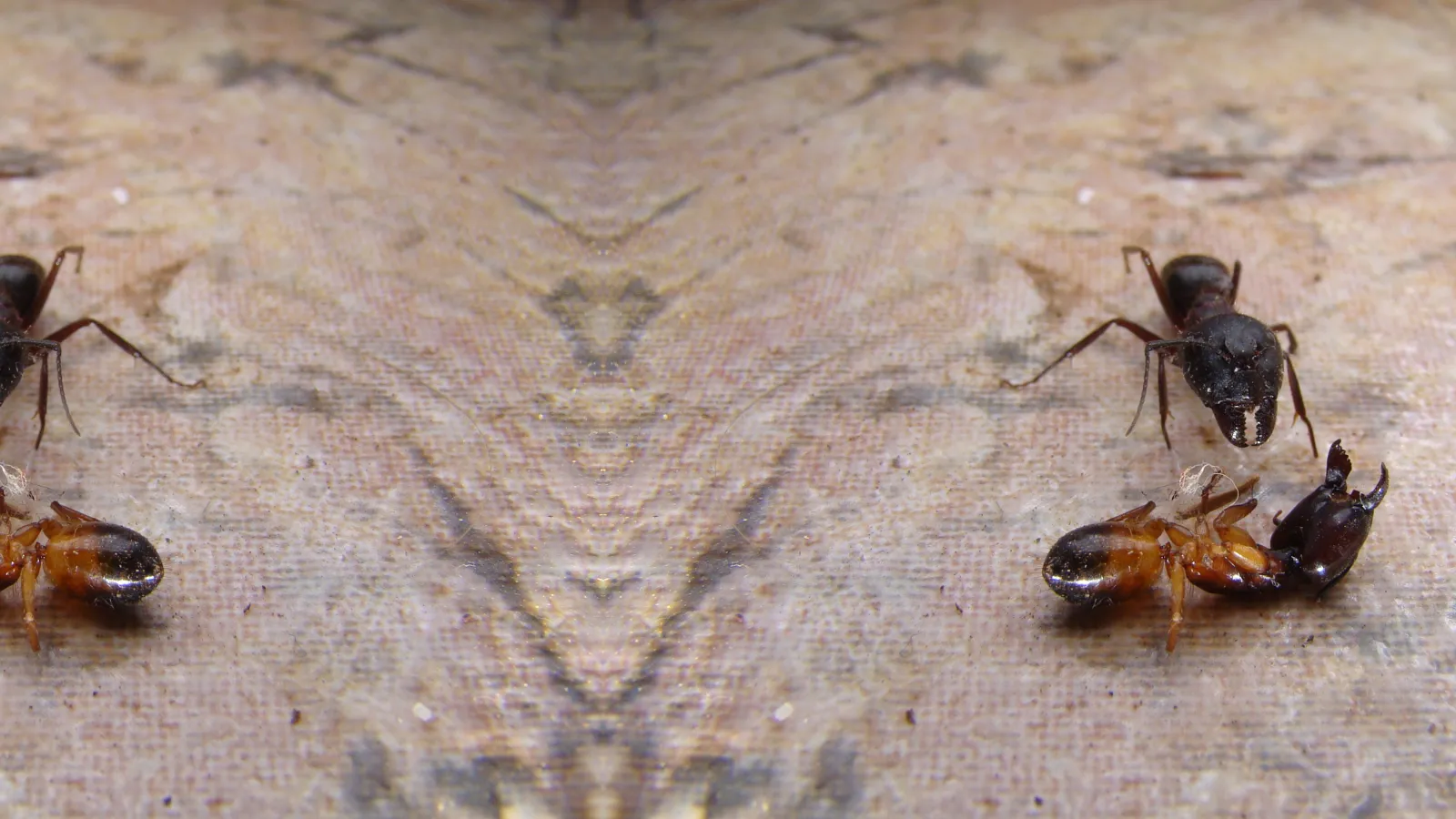
Pavement Ants
Latin Name: Tetramorium caespitum
Pavement ants get their name from their habit of nesting in and around paved areas. They are commonly found under sidewalks, driveways, patios, pavement cracks, and along the foundations of homes and businesses. Native to Europe, pavement ants are now found throughout many eastern and southern areas of the United States.
These ants are small, dark brown to black in color, and often have lighter-colored legs. Worker ants are typically very small, while reproductive males and queens are larger and have wings. Pavement ants live in large colonies that can contain thousands of ants, which allows them to spread quickly and become difficult to control once they are established.
Outdoors, pavement ants nest in soil, cracks in pavement, along sidewalks, under driveways, near foundations, and around ground-level masonry walls. They are often seen traveling across sidewalks, walkways, decks, patios, and lawns as they search for food.
Pavement ants may also move indoors while foraging or looking for a sheltered place to nest. They can enter through gaps in exterior walls, foundation cracks, and openings around windows and doors. Once inside, they are usually found in dark, hidden areas such as wall voids, crawl spaces, and spaces beneath flooring.
Food and shelter are the main things that attract pavement ants to homes and businesses. Crumbs on counters, food debris on floors, pantry items, pet food, and other easy food sources can draw them indoors. In some cases, pavement ants may create satellite nests inside the home, allowing the colony to expand into protected areas.
Pavement ants are mostly considered nuisance pests, but they should not be ignored. As they travel across surfaces, they can pick up and spread bacteria, contaminating countertops, floors, and stored food. Because they often have multiple nesting sites and large colonies, pavement ants can be hard to eliminate without professional help.
Pavement ants are notoriously difficult to remove, so contacting the professionals at PestNow may be necessary.
Similar Pests: Carpenter Ants, Common Ants, Fire Ant