
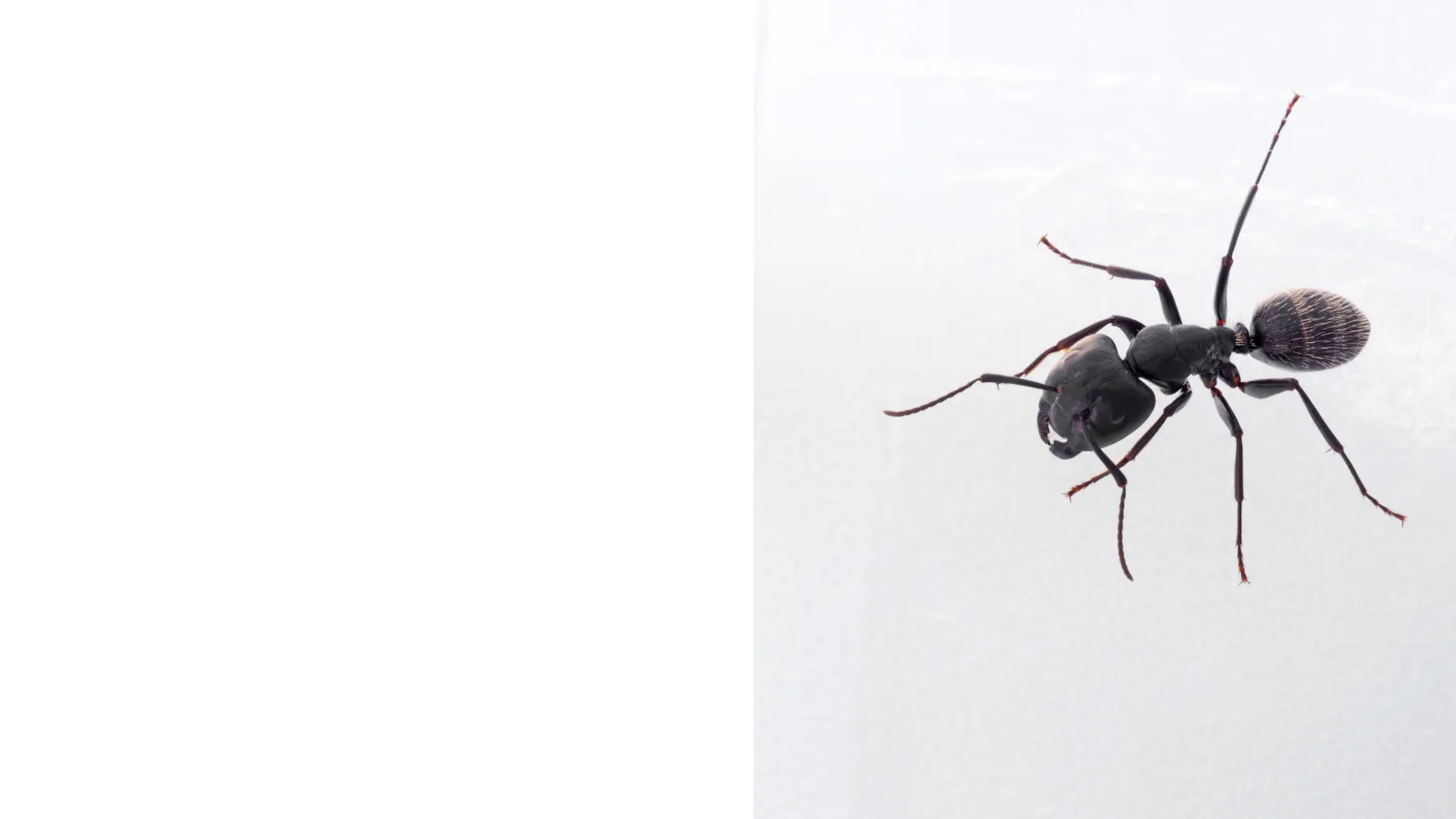
Carpenter Ants
Scientific Name: Camponotus
What are carpenter ants?
Carpenter ants are large, wood-destroying ants that can become a serious problem when they nest inside homes. They are the largest household-invading ant species in the United States, typically growing between 1/4 and 1/2 inch long. Carpenter ants may be black, red, or a combination of both colors.
Unlike termites, carpenter ants do not eat wood. Instead, they use their strong mandibles to tunnel through wood and create nesting galleries. In nature, this helps break down dead or decaying trees. Inside a home, however, their tunneling can damage wood that has already been weakened by moisture or decay.
Where will I find carpenter ants?
Outdoors, carpenter ants are often seen around gardens, walkways, decks, porches, trees, and woodpiles. They commonly build their main nests in dead trees, tree stumps, rotting fence posts, fallen logs, and piles of firewood.
Inside, carpenter ants usually choose damp or damaged wood for satellite nests. Common nesting areas include wood around windows, doors, chimneys, sinks, hot water pipes, rooflines, crawl spaces, and wall voids. Because they prefer moisture-damaged wood, seeing carpenter ants indoors may be a sign of a leak, water damage, or poor ventilation.
Why do I have a carpenter ant problem?
Carpenter ants are attracted to properties that offer food, moisture, and nesting sites. They feed on a variety of foods, including dead insects, sweets, proteins, pet food, sweet liquids, and honeydew produced by aphids.
They often make their way indoors while searching for food or shelter. Openings in the foundation, gaps around windows and doors, damaged weatherstripping, and cracks in exterior walls can all give carpenter ants access to your home.
Are carpenter ants dangerous?
Carpenter ants are not considered dangerous to people, but they can be damaging to property. Their concern comes from their nesting habits. When they tunnel through wood to create galleries, they can weaken already damaged structural wood over time.
Carpenter ant damage is often linked to moisture problems. They are more likely to nest in wood that has been softened by leaks, water damage, or wood-destroying fungi. While they usually do not cause the same type of damage as termites, an active carpenter ant colony should still be addressed quickly.
How can I tell if I have carpenter ants?
Carpenter ants are usually larger than most common household ants, making them easier to notice. You may see them traveling along decks, porches, walkways, baseboards, or near windows and doors.
Other signs can include a faint rustling sound inside walls or wood, especially if the colony is active. Carpenter ants may also leave behind small piles of wood shavings or debris that look like sawdust. If you see one carpenter ant inside, there may be more nearby.
How can I help prevent carpenter ants?
To help prevent carpenter ants, start by reducing moisture and sealing entry points around your home. Caulk cracks in the foundation and exterior walls, add weatherstripping around windows and doors, and repair damaged seals.
Fix leaking pipes, faucets, and exterior fixtures, and use dehumidifiers in damp areas like basements. Crawl spaces should be properly ventilated, and any water-damaged wood should be removed and replaced.
Outside, trim trees and shrubs away from the home, remove old wood piles, fallen trees, and tree stumps, and store firewood away from the structure. Pick up uneaten pet food each evening and reduce outdoor attractants that may draw ants close to your home.
Professional pest control can help locate nesting areas, treat active colonies, and identify moisture conditions that may be contributing to the problem.
Similar Pests: Common Ants, Fire Ant, Pavement Ant
FAQs About Carpenter Ants
Do carpenter ants eat wood like termites do?
No. Carpenter ants do not eat wood—they chew through it to build tunnels and nests, pushing the debris (called frass) out of their galleries.
How can I tell if I have carpenter ants or regular ants?
Carpenter ants are larger (up to ½ inch), often black or reddish-black, and may be seen near moist wood or leaving behind frass. Regular ants are smaller and usually nest in soil, walls, or food areas.
Can carpenter ants destroy my house?
Over time, yes. A large or long-term infestation can weaken structural wood, including beams, joists, and window frames. They're not as fast as termites, but damage accumulates if untreated.
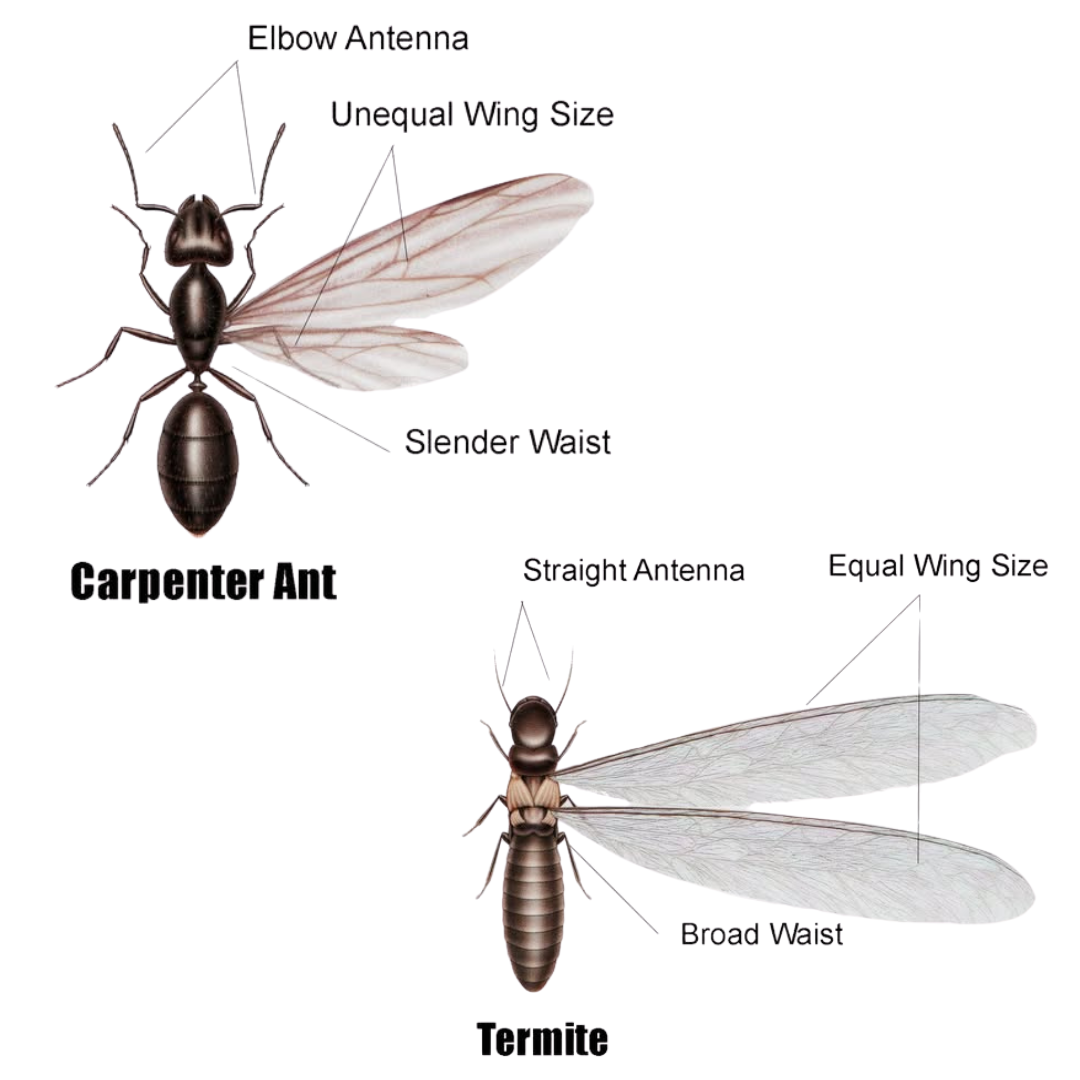
What’s the difference between a termite and a carpenter ant?
Termites have straight antennae, a broad waist, and they eat wood
Carpenter ants have elbowed antennae, narrow waists, and chew through wood but don't ingest it
Termite wings are equal length; carpenter ant wings are unequal.
Why am I seeing carpenter ants in the winter? Aren’t they supposed to be dormant?
If you're seeing them in winter, it usually means they've built a nest inside your heated home, where it's warm enough for them to stay active.
Are carpenter ants dangerous to humans or pets?
No. Carpenter ants may bite if threatened, but they're not venomous or poisonous. The main concern is structural damage, not health risks.