Seeing Signs Of Powderpost Beetles?
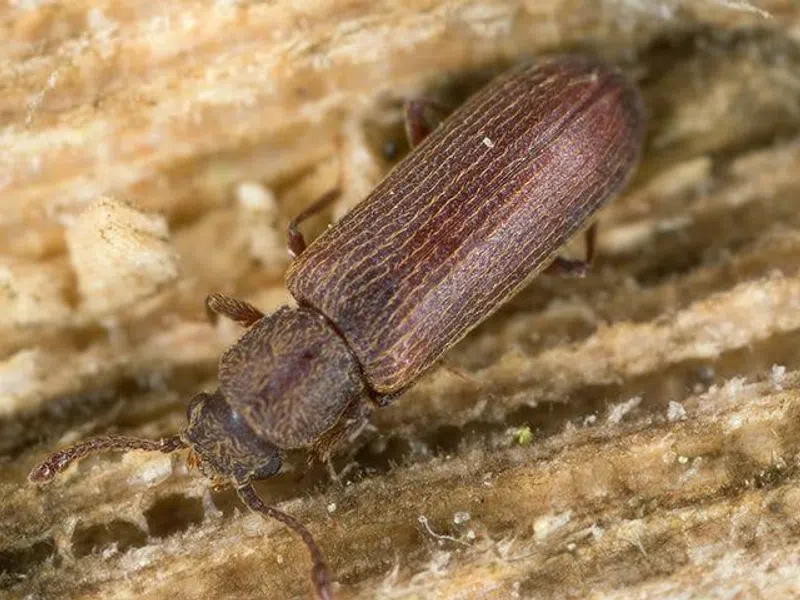
When most people think of wood-destroying pests, termites and carpenter ants usually come to mind first. However, powderpost beetles can also damage wood inside homes and businesses. These small beetles are easy to overlook, but their larvae can tunnel through wood for months or even years before signs of activity become obvious.
Powderpost beetles are slender insects that are usually reddish-brown or black. Adults are small and have six legs and antennae. Their larvae are cream-colored, C-shaped, and live inside wood as they feed and develop. In many cases, homeowners do not see the beetles themselves. Instead, they notice small round exit holes in wood or fine, powder-like dust left behind near damaged areas.
Unlike termites, powderpost beetle damage is caused mainly by the larvae. Female beetles lay eggs on the surface of wood or inside cracks and crevices. Once the eggs hatch, the larvae bore into the wood and continue feeding as they grow. Since this process can take several years, an infestation may remain hidden until adult beetles finally emerge.
Powderpost beetles can infest flooring, trim, furniture, antiques, wood frames, structural wood, and other wooden materials. Infestations are often introduced when infested wood, furniture, lumber, or firewood is brought indoors.
To help prevent powderpost beetles, inspect wooden furniture, antiques, firewood, and building materials before bringing them into your home. Make sure lumber has been properly dried and stored, and consider painting or staining exposed wood to make it less attractive. Reducing moisture is also important, so use dehumidifiers when needed and keep humidity levels low.
You can also help keep beetles from entering by sealing cracks in the foundation and exterior walls, adding weatherstripping around windows and doors, and installing door sweeps on exterior doors.
If you notice small holes, powdery wood dust, or damage to wood inside your home, PestNow can help. Our trained pest professionals can inspect the affected areas, determine whether the infestation is active, and recommend the best treatment plan to protect your home from further damage.