
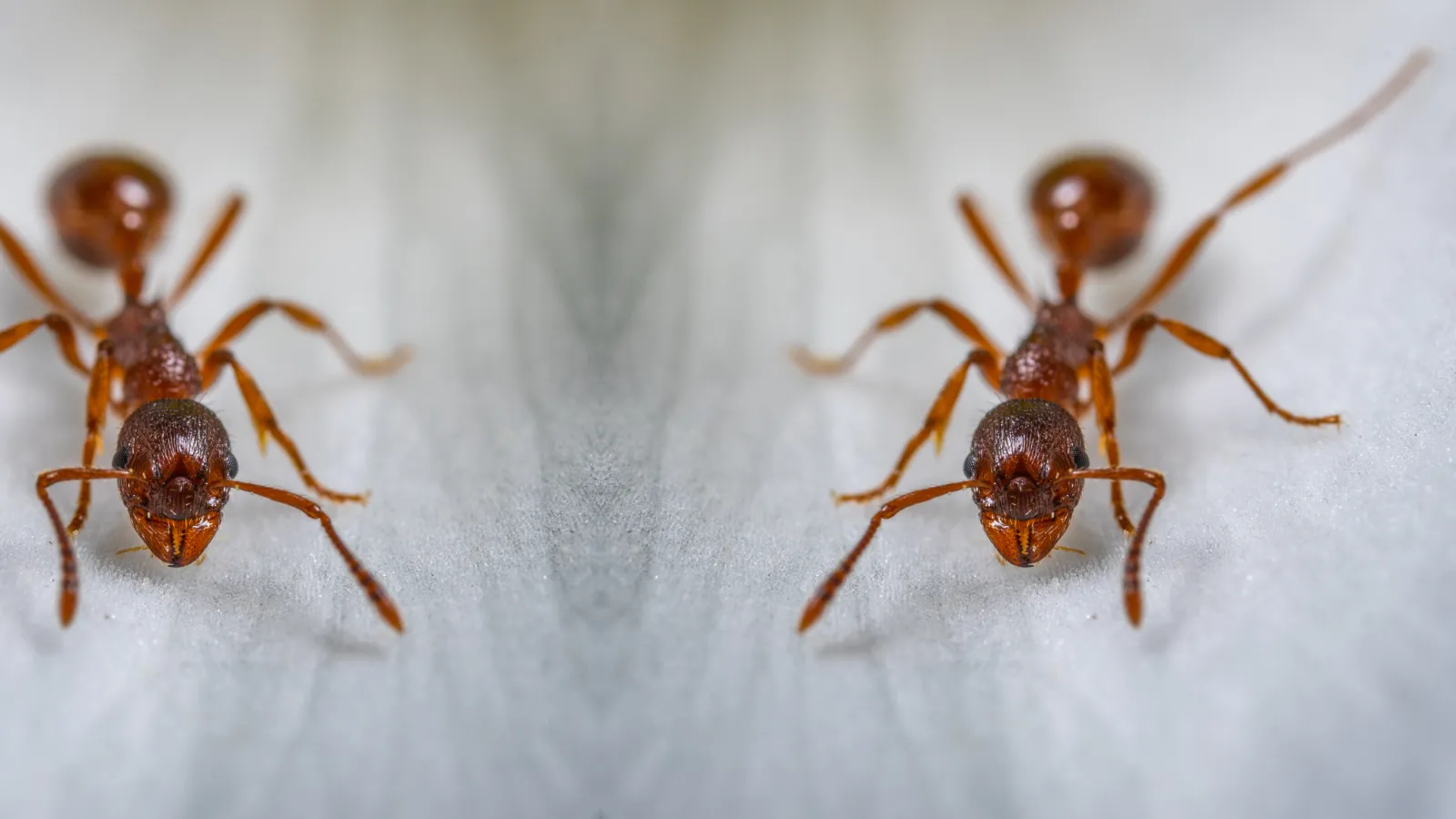
Fire Ants
Latin Name: Solenopsis invicta
What are fire ants?
Fire ants are aggressive ants known for their painful, burning stings. They are usually reddish-brown to reddish-black and use their strong mandibles to hold onto skin before stinging and injecting venom.
Fire ants are best known for their large, irregular nesting mounds. These mounds are often flattened in shape and may be found in open, sunny areas. Fire ant colonies can be very defensive, and when disturbed, workers may swarm and sting together.
Where will I find fire ants?
Fire ants prefer open, sunny areas and usually avoid shady or wooded locations. They commonly build nests in lawns, fields, parks, pastures, and other grassy spaces.
You may also find fire ant mounds near foundations, along fence lines, and close to rivers, ponds, streams, or other water sources. Fire ants are not usually indoor pests, but if a nest is close to a home or building, they may enter through cracks in the foundation, gaps around air-conditioning units, or other small openings.
Why do I have a fire ant problem?
Fire ants are attracted to properties that provide open ground, warmth, moisture, and access to food. Overwatered lawns, exposed soil, and areas near foundations can create favorable nesting conditions.
Once a colony is established, fire ants can spread across a property and create multiple mounds. Their aggressive behavior makes them especially difficult to ignore in yards, playgrounds, gardens, and other outdoor spaces.
Are fire ants dangerous?
Yes, fire ants can be dangerous. They are highly defensive and will attack people or animals that disturb their mound. Because they often sting in groups, a person or pet may receive multiple stings at once.
Fire ant stings can cause burning pain, itching, swelling, and raised pustules. In some people, the venom may trigger serious allergic reactions, including life-threatening anaphylaxis.
Fire ants can also damage property and outdoor spaces. They may harm young plants, garden plants, and crops. They are also attracted to electrical equipment and can damage air conditioners, circuit breakers, farm equipment, and other outdoor electrical systems.
How can I help prevent fire ants?
To help prevent fire ants, reduce access to your home and make your property less attractive for nesting. Seal cracks and gaps in the foundation and exterior walls, and install door sweeps on exterior doors.
Keep outdoor trash cans and compost bins covered with tight-fitting lids. Avoid overwatering your lawn, since excess moisture can encourage fire ant activity. Creating a stone or gravel barrier between soil and your foundation can also help reduce nesting close to the home.
Because fire ants are aggressive and can sting in large numbers, it is best to avoid disturbing mounds. Professional fire ant control can help treat active colonies and reduce the risk of future activity around your property.
Similar Pests: Carpenter Ants, Common ants, Pavement ants