
Cellar Spiders
Latin Name: Pholcus phalangioides
What are cellar spiders?
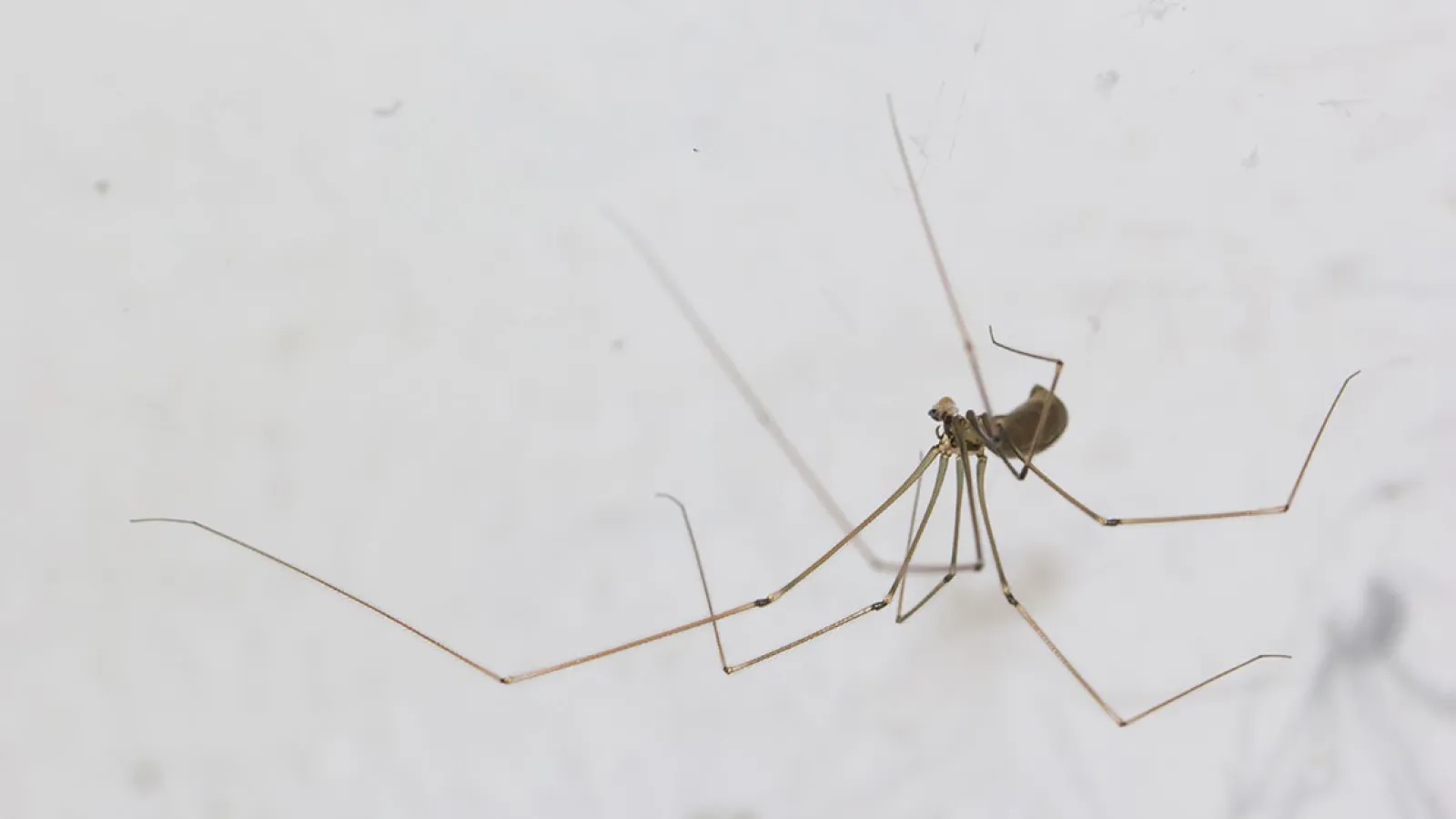
Cellar spiders are common household spiders known for their small bodies and long, thin legs. They are often mistaken for daddy long legs, but cellar spiders are true spiders. They may be pale yellow, tan, gray, or light brown and are commonly found throughout the United States.
There are two main types of cellar spiders: long-bodied and short-bodied. Long-bodied cellar spiders can have legs up to two inches long, while short-bodied cellar spiders have shorter legs, usually around 1/2 inch.
Where will I find cellar spiders?
Outside, cellar spiders build loose, messy webs in protected areas such as caves, rock piles, woodpiles, under decks, sheds, and around outdoor lights. Outdoor lighting can attract insects, which then attracts spiders looking for food.
Inside, cellar spiders prefer damp, dark areas. They are commonly found in basements, crawl spaces, laundry rooms, bathrooms, closets, warehouses, and storage areas. They are often seen hanging upside down in their webs while waiting for insects or other spiders to get caught.
Why do I have a cellar spider problem?
Cellar spiders are attracted to homes and yards that provide moisture, shelter, and a steady food source. Since they feed on insects and other spiders, a cellar spider problem may also point to other pest activity in or around the home.
They may move indoors when outdoor conditions become too hot or dry. Once inside, they are drawn to humid areas such as basements, crawl spaces, and bathrooms. If moisture levels are high and insects are present, cellar spiders can become difficult to eliminate.
Are cellar spiders dangerous?
Cellar spiders are considered nuisance pests. They are not known to bite people, and their venom is not strong enough to cause serious health concerns. Their presence is more annoying than dangerous.
The main issue with cellar spiders is the number of webs they create. Unlike some spiders that remove old webs before building new ones, cellar spiders often layer new webs over old ones. This can lead to messy, noticeable cobwebs in corners, ceilings, basements, and storage areas.
Why are cellar spiders hard to get rid of?
Cellar spiders can be difficult to control because they often live in hidden, cluttered, or hard-to-reach areas. They also stay close to places where insects are active. If the conditions attracting them are not corrected, such as high humidity, clutter, or other pests, they may continue to return.
How can I help prevent cellar spiders?
To help prevent cellar spiders, reduce moisture and limit the areas where they can hide. Keep storage areas clean, organized, and clutter-free. Use dehumidifiers in damp basements, ventilate crawl spaces, and address moisture issues around the home.
Seal cracks and gaps in the foundation, exterior walls, roofline, windows, and doors. Repair damaged screens and inspect firewood before bringing it indoors. Firewood should be stacked away from the home to reduce spider and insect activity near the structure.
Outdoor lighting can also attract insects and spiders. Keep exterior lights off when possible, or replace white lights with yellow bulbs or LED lights that are less attractive to insects. By reducing moisture, sealing entry points, and controlling insect activity, you can help keep cellar spiders from becoming a recurring problem.
Similar Pests: Black & Brown Widow Spiders, Brown Recluse Spider