
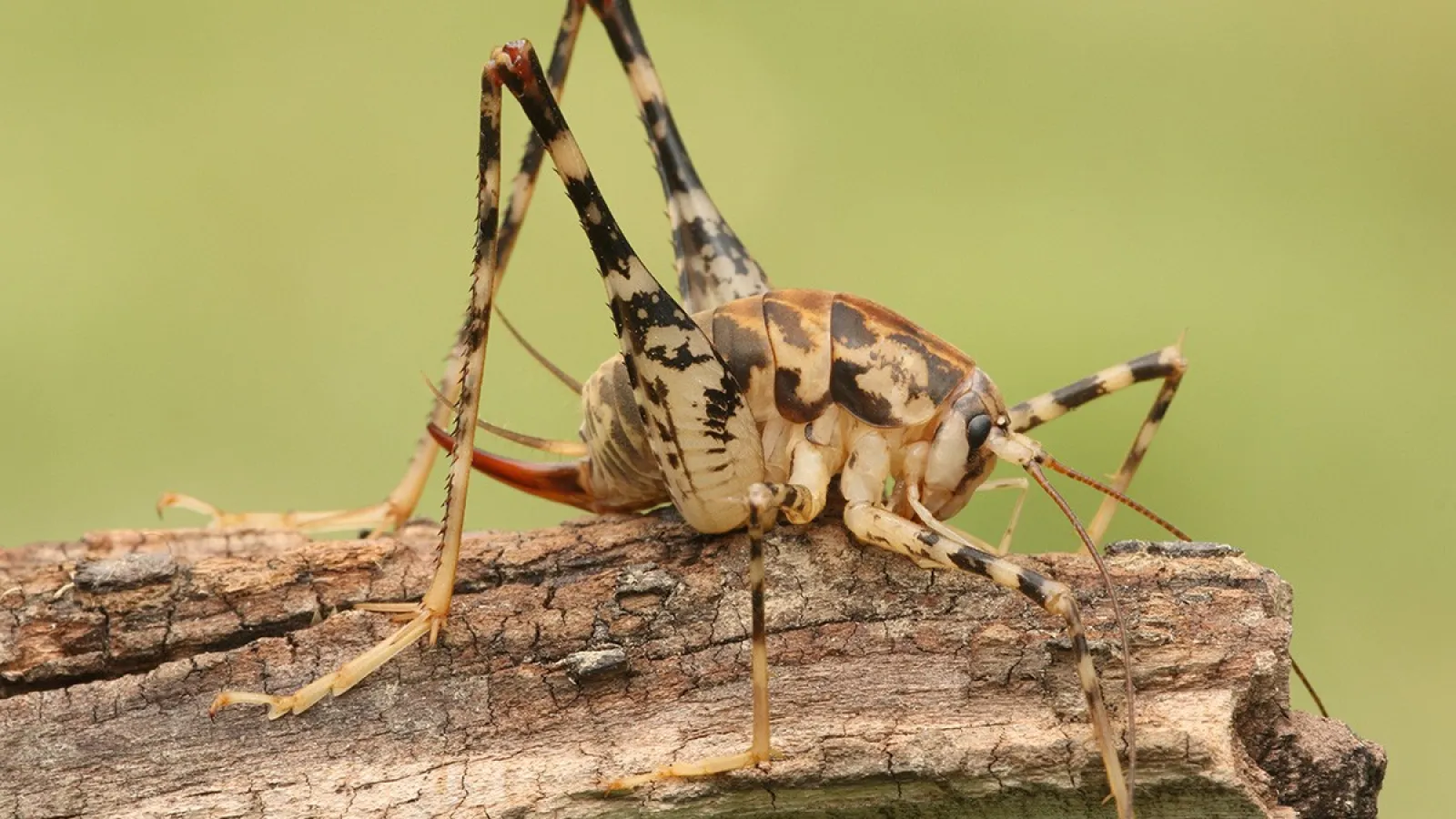
Camel Crickets
Latin Name: Tropidischia xanthostoma
Camel crickets are small, humpbacked insects from the Rhaphidophoridae family. They get their name from the raised, camel-like shape of their backs. These crickets are light to dark brown, often with darker mottled markings, and adults can grow up to about 1 ½ inches long.
Unlike many other crickets, camel crickets do not have wings or sound-producing organs, so they do not chirp. Instead, they rely on their large, powerful hind legs to jump away when frightened. Their sudden jumping can be alarming, but camel crickets are not aggressive and do not bite.
Camel crickets are found throughout the United States and prefer cool, damp, dark environments. Outdoors, they are commonly found under mulch, rocks, landscaping ties, leaf piles, woodpiles, rotting logs, and other organic debris. They may also live around drains, sewers, air conditioning units, and other moist areas.
When outdoor conditions become too hot or dry, camel crickets may move indoors in search of moisture and shelter. Inside homes and businesses, they are often found in basements, crawl spaces, laundry rooms, bathrooms, garages, closets, and other dark, humid spaces.
Camel crickets are not considered dangerous to people. They do not have fangs and are not known for biting. However, they can become a nuisance when they invade in large numbers. They may also damage personal items by chewing on fabrics, curtains, clothing, rugs, upholstered furniture, cardboard, and other stored materials.
Camel cricket problems often start when moisture and easy entry points are present around a home. Gaps around doors, cracks in the foundation, damaged weather stripping, open garage doors, and damp areas near the foundation can all make it easier for these pests to get inside.
To help prevent camel crickets, reduce moisture around your home and seal off access points. Repair foundation cracks, install door sweeps on basement doors, replace damaged weather stripping, and make sure gutters direct water away from the home. Remove standing water, keep basements and crawl spaces well-ventilated, and use a dehumidifier when needed.
Outside, keep firewood, leaf piles, mulch, and other debris away from the foundation. Firewood should be stored at least 30 feet from the home and inspected before being brought indoors. Inside, reduce clutter in basements, closets, and storage areas to limit hiding spots. Store clothing, blankets, and other fabric items in plastic containers with locking lids instead of cardboard boxes.
By controlling moisture, sealing entry points, and removing hiding places, homeowners can reduce the risk of camel crickets moving indoors and becoming a recurring problem.
Similar Pests: Crickets, Mole Crickets