
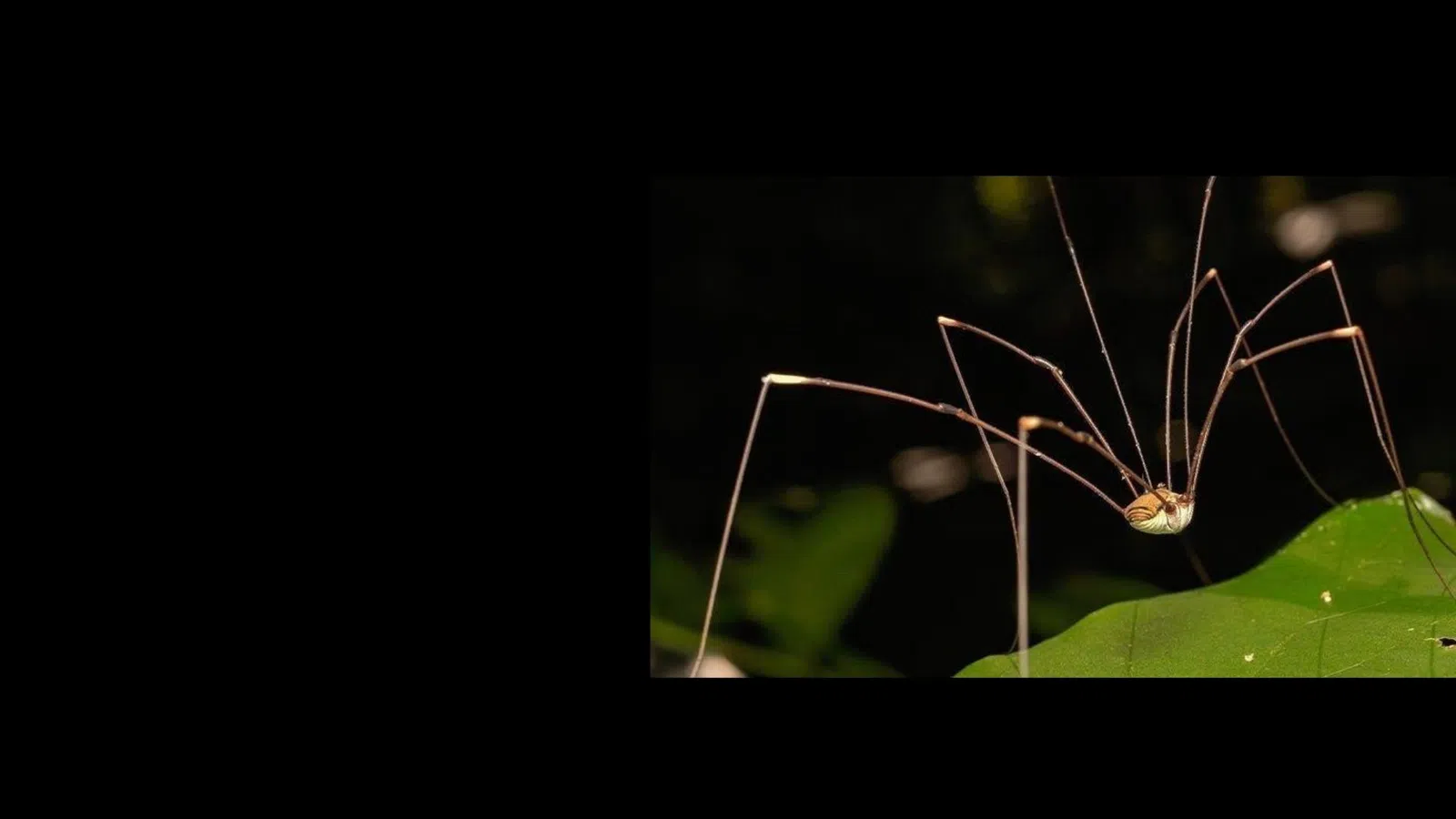
Granddaddy Long Legs
Latin Name: Pholcus phalangioides
What are daddy long legs?
Daddy long legs are often mistaken for spiders because of their long, thin legs, but they are not true spiders. They belong to the family Phalangiidae and are also known as harvestmen.
Daddy long legs have eight long legs, poor vision, and a single oval-looking body because their two body segments are fused together. Unlike spiders, they do not produce silk, do not build webs, and do not have venom glands. They use their small mouthparts to hold onto prey while feeding.
Where will I find daddy long legs?
Daddy long legs are most active at night when they hunt for insects and other small pests. During the day, they usually hide in cool, damp, protected areas.
Outside, they are often found under rocks, logs, fallen trees, tree stumps, leaf piles, overgrown shrubs, bushes, and other yard debris. When they move indoors, they tend to choose humid, dark, quiet areas such as basements, crawl spaces, bathrooms, laundry rooms, and garages.
Why do I have a daddy long leg problem?
Daddy long legs are often drawn to properties with excess moisture, standing water, overgrown vegetation, or plenty of insects to feed on. Leaky pipes, dripping fixtures, damp basements, and shaded yard debris can all create conditions they like.
They are most common in late summer and fall. During periods of hot or dry weather, they may move indoors looking for cooler, more humid shelter. They can enter through open doors, windows, gaps under doors, cracks in the foundation, or torn screens.
Are daddy long legs dangerous?
No, daddy long legs are not dangerous to people. There is a common myth that they are highly venomous but unable to bite humans, but this is not true. Daddy long legs do not have venom glands and are not considered a threat.
In fact, they can be beneficial outdoors because they feed on a variety of small insects and help reduce pest populations. However, they can become a nuisance when they gather around or inside the home.
How can I help prevent daddy long legs?
To help prevent daddy long legs, reduce moisture and remove outdoor hiding places. Clear away fallen trees, tree stumps, leaf piles, and other yard debris. Trim shrubs, bushes, and overgrown vegetation away from the exterior of your home.
Seal cracks and crevices in the foundation and exterior walls, repair torn or loose screens, and close gaps around doors and windows. Remove standing water from your property and fix leaky pipes, faucets, or fixtures.
Keeping your property dry, clean, and well-maintained can help make it less attractive to daddy long legs and the insects they feed on.