Carpenter Bees vs. Bumble Bees
Difference Between Carpenter Bees and Bumble Bees
Honey bees are one stinging insect that most homeowners are happy to see around their yards. They produce honey, pollinate plants, and play an important role in the environment. However, several other bee species are also common throughout North Carolina, Maryland, Virginia, and West Virginia, including carpenter bees.
Carpenter bees are valuable pollinators, but they can become a problem when they begin tunneling into wooden areas around a home or business. Unlike termites, carpenter bees do not eat wood. Instead, female carpenter bees create tunnels where they can lay their eggs and raise their young. Over time, repeated nesting can weaken wood and lead to noticeable property damage. PestNow can help identify carpenter bee activity and develop a treatment plan to protect your property.
What Is the Difference Between Carpenter Bees and Bumble Bees?
Carpenter bees and bumble bees are often confused because they are similar in size and coloring. However, there are a few key differences.
Appearance
Bumble bees are covered in fuzzy hair across most of their bodies and usually have noticeable yellow-and-black markings.
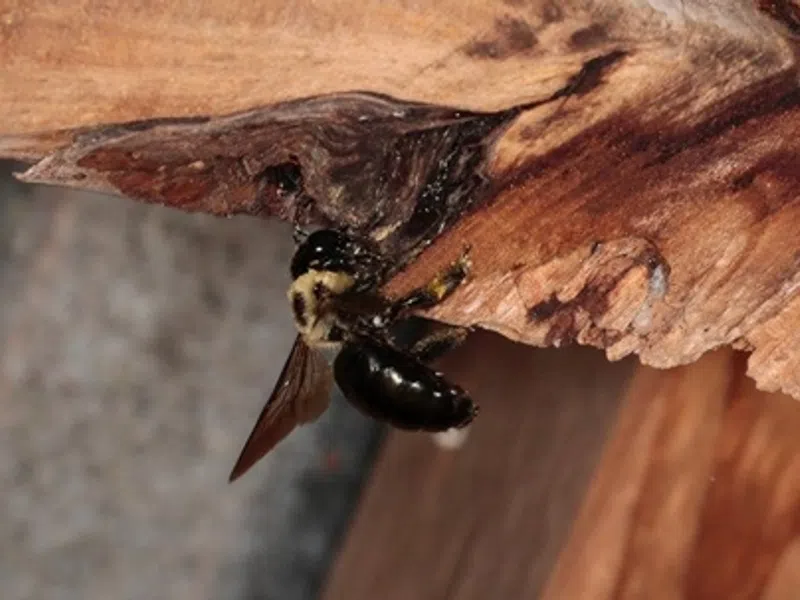
Carpenter bees generally have a fuzzy yellow or tan area behind the head, but their abdomen is smooth, shiny, and mostly black.
Flight Patterns
Bumble bees often move directly between flowers and their nests.
Carpenter bees may hover near decks, porches, rooflines, or other wooden structures and frequently fly in quick, darting patterns.
Nesting Habits
Bumble bees are social insects that live together in colonies, usually in underground nests or protected cavities.
Carpenter bees are mostly solitary. Each female typically creates and maintains her own nesting tunnel inside wood.
Are Carpenter Bees Aggressive?
Carpenter bees may appear aggressive when they hover near people, but they are generally not looking to sting.
Male carpenter bees are often responsible for territorial hovering and cannot sting. Females are capable of stinging, but they usually do so only when handled or directly threatened.
Even though carpenter bees are less aggressive than many other stinging insects, homeowners should avoid disturbing an active nesting area.
Are Carpenter Bees Important Pollinators?
Yes. Carpenter bees help pollinate many flowers, garden plants, trees, and agricultural crops. Their pollination activity makes them an important part of the local ecosystem.
However, their environmental value does not mean homeowners should allow them to repeatedly nest in decks, siding, fences, sheds, or other wooden structures.
How Do Carpenter Bees Damage Property?
Female carpenter bees create round entrance holes in wood and then tunnel several inches along the grain. They use these tunnels to create nesting chambers for their eggs.
A single tunnel may not cause serious structural damage, but carpenter bees often return to the same nesting areas year after year. Woodpeckers may cause additional damage as they search for carpenter bee larvae inside the wood.
Repeated activity can lead to:
- Multiple holes in wooden surfaces
- Staining beneath nesting areas
- Weakened or damaged wood
- Woodpecker activity around the tunnels
- Costly repairs to decks, siding, trim, fences, and outdoor structures
What Types of Wood Attract Carpenter Bees?
Carpenter bees commonly target exposed, weathered, damaged, or untreated wood. Painting, staining, or sealing exposed wood can make these surfaces less attractive to carpenter bees.
How Can You Help Prevent Carpenter Bees?
Homeowners can reduce the likelihood of carpenter bee activity by taking several preventive steps:
- Paint or stain exposed wood
- Repair damaged or decaying wooden areas
- Seal old nesting holes after confirming they are inactive
- Replace severely damaged boards
- Keep wooden structures properly maintained
- Inspect decks, porches, siding, and rooflines during the spring
Pro Tip: It is important not to seal an active hole while bees are still inside. Trapped bees may create new exit holes and cause additional damage.
What Are the Signs of a Carpenter Bee Infestation?
Common signs of carpenter bee activity include:
- Large bees hovering near wooden structures
- Smooth, round holes approximately the size of a fingertip
- Sawdust or wood shavings beneath an entrance hole
- Yellow or brown staining on the wood
- Scratching or buzzing sounds inside wooden areas
- Woodpeckers repeatedly pecking at the same location
How Does Professional Carpenter Bee Control Help?
Carpenter bee control involves identifying active nesting areas, treating existing tunnels, and helping prevent future activity.
A PestNow professional can inspect your property for carpenter bees, nesting holes, vulnerable wood, and signs of related damage. Based on the inspection, we can recommend an appropriate treatment plan for your home or business.
Professional service can help:
- Address active carpenter bee nesting
- Reduce the risk of stings
- Protect wooden structures from continued tunneling
- Identify hidden or hard-to-reach nesting areas
- Provide recommendations for sealing and repairing damaged wood
- Reduce the likelihood of recurring activity
Contact PestNow for Carpenter Bee Control
Carpenter bees are helpful pollinators in nature, but they can cause expensive damage when they nest in wooden areas around your property. Contact PestNow today to learn more about our residential and commercial pest control services and schedule an inspection for carpenter bees.